Frances Xavier Cabrini 🥀 Birthday

Frances Xavier Cabrini
Date of birth:  July 15, 1850
In 1880, near Lodi, Italy, she founded the Missionary Sisters of the Sacred Heart of Jesus, which did charity work for the poor.
 https://blogger.googleusercontent.com/img/b/R29vZ2xl/AVvXsEhffd0MaJnXX6S6SZCjvRMfBgDo2TuYHMEMCR12tgbskXvhKNN5NnClh1jJuSM5Bu3c140YzZyL72Id-UklYNd0QuCU-VVxrZwv-k6JEccgWPNYpBT7tPnhl792JnY-CJHoHRNjUxe8Umd6/s400/photo.JPG
In 1889, Pope Leo XIII sent her to the United States, where she offered assistance to Italian-American immigrants. 
She died on December 22, 1917, in Chicago, Illinois
and was declared a saint by Pope Pius XII in 1946.
https://blogger.googleusercontent.com/img/b/R29vZ2xl/AVvXsEhDz9u2GZGmEboS_39KtT8Mr_Jh5H-IoMlNouEWdV-uQZpmPH-GAitd2lro9hkzBJHNN4dufZxAfsjmnuHltwyCs6recLypdJRpJX9mK6jV0XC3Bi94obxVKLWdmI9dhV_QpHEf2GNeNatm/s1600/St.+Francis+Cabrini.jpg
Best Known For:
St. Frances Xavier Cabrini founded the 
Missionary Sisters of the Sacred Heart of Jesus
https://blogger.googleusercontent.com/img/b/R29vZ2xl/AVvXsEh9GMeR1AXtkVKsUB40D-8_VHWXqWynyMreVVQRGW5VuWJp4VpRF5cizFY_45SJvXYWULJbAYzgDGHWQju47KezIpq9fPI-YkB2Izuxw75pxJEc6ohgVLwS2L-8KF_wVt4ntBdhHxOAFoZj/s1600/MissionarySisters1889.jpg
and helped Italian-American immigrants. 
She was canonized in 1946.
     
NAME:     St. Frances Xavier Cabrini 

PLACE OF BIRTH:  Sant'Angelo Lodigiano, Lombardy, Italy 
BIRTH DATE:          July 15, 1850

DEATH DATE:           December 22, 1917
PLACE OF DEATH:   Chicago, Illinois


AKA:   Mother Cabrini 
OCCUPATION:  Nun, Saint


http://plamensart.com/wp-content/uploads/2012/12/St.-Mother-Cabrini.jpg

How the Radical '60s and '70s Helped Make Father's Day a National Holiday

How the Radical '60s and '70s
Helped Make Father's Day a National Holiday
Olivia B. Waxman
Jun 16, 2017
While Mother's Day has been a national holiday since 1914, Father's Day wouldn't get the same legal status until more than half a century later, when President Nixon signed into law a measure declaring the third Sunday of June be observed as Father's Day.

The proclamation acknowledged that it had already "long been our national custom to observe each year one special Sunday in honor of America's fathers," and Presidents had been making public statements in support of Father's Day since the early 1900s. Annual celebrations for dads date back to 1910, when Sonora Louise Smart Dodd organized such an event to honor the life of her father, William Smart, a Civil War veteran and who raised six children on his own after his wife died in childbirth.

But things changed in the 1970s. Experts say that one crucial force was a major shift in how the American father was perceived.
The "New Fatherhood" movement developed in the early 20th century — in the midst of the temperance movement and concerns that urbanization was creating a generation of degenerates — as a growing body of research on child-rearing urged dads to support their kids not only financially but also emotionally, from changing diapers to playing with them to giving them life advice, as Ralph LaRossa, the historian behind the History of Fatherhood Project, notes in Deconstructing Dads: Changing Images of Fathers in Popular Culture. 

As such, early iterations of the push for a national Father's Day often focused on validating the importance of the father's role in the family. For example, during the Great Depression, some saw Father's Day as a way to boost the self-esteem of men who'd lost their jobs or had their wages cut — to show these dads they could still be there for their kids as a companion and male role model. Then, during World War II, when fathers were more likely to be away fighting, Father's Day ads showed images of dads in uniform and touted the role of "the father as a protector" of home and hearth.
LaRossa argues that that same kind of valorization of the father as protector — though not necessarily as a physical presence in the home — may have been happening in the late '60s and early '70s too, during the Vietnam War, citing a section of the Congressional Record in which Montana Senator Mike Mansfield argued that Father's Day deserved as much recognition as Mother's Day got, because the "trying times" through which Americans were living placed new "burdens and responsibilities" on dads.
But Vietnam wasn't the only thing happening at the time.
Another crucial element in the nationalization of Father's Day was the women's liberation movement, which offered women a forum in which to fight for the same workplace opportunities as those men were entitled to. For some, the idea of that equality had echoes in the home. As parents started to split the tasks of parenting more equally, it got stranger that mothers were celebrated in a way that fathers weren't yet. “What seemed to be different in the late 20th century is the belief that dads should take on more of the routine tasks of taking care of kids, like changing diapers, and to do it in the interest of gender equality, which wasn’t as central a thing in the early 20th-century ‘New Fatherhood’ movement,” LaRossa says.
For others, however, the desire for a day for fathers was more about a backlash to the perception of the father's place in the family slipping, suggests Timothy Marr, a professor of American Studies at the University of North Carolina at Chapel Hill . “It was only after the Sexual Revolution and the establishment of no-fault divorce in the 1960s challenged the prominence and permanence of the father’s role in the home that Congress officially authorized a permanent observance in 1972," he writes in American Masculinities: A Historical Encyclopedia.
Nowadays, while many parents are still working on mastering the perfect balance of gender equality in parenting in the 21st century, everyone seems to generally agree — thanks in part to the men's clothing industry — that dads deserve a token of appreciation one day of the year, even as Americans continue to debate what a father's responsibilities should be in the home.

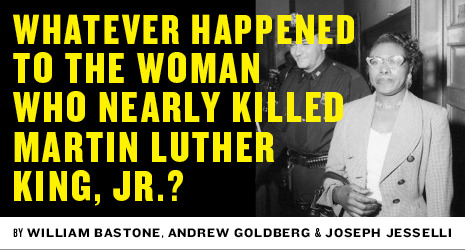
The Woman Who Almost Killed Dr. Martin Luther King Jr.

The Woman Who Almost Killed
Dr. Martin Luther King Jr.
https://66.media.tumblr.com/9b126322bae5192e08e67305a968300d/tumblr_plp139JzYH1v3adc7o4_1280.jpg
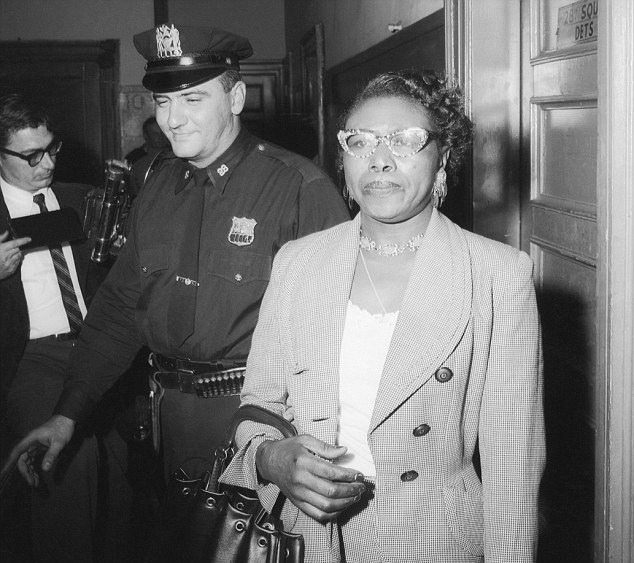
 Dr. Martin Luther King’s attacker being booked
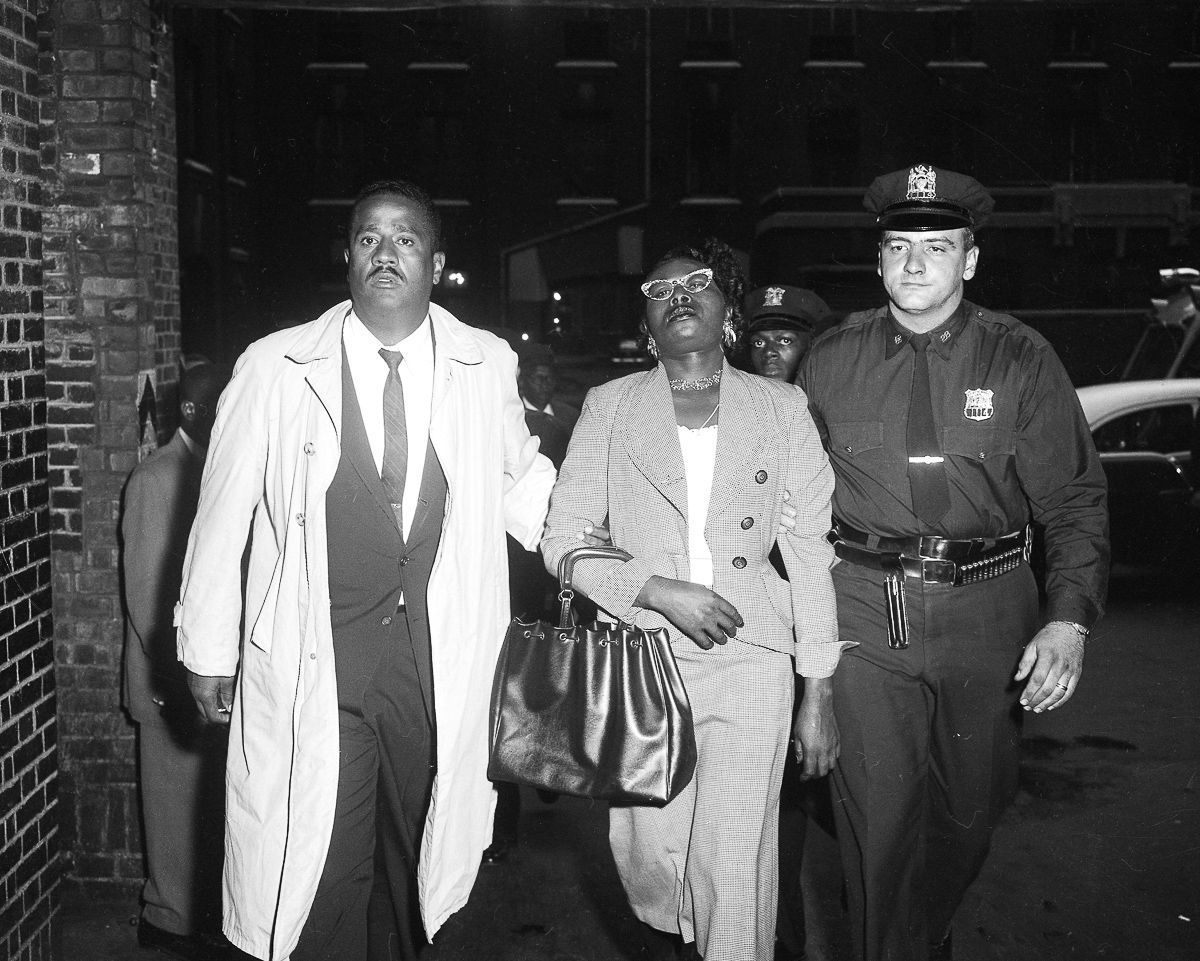
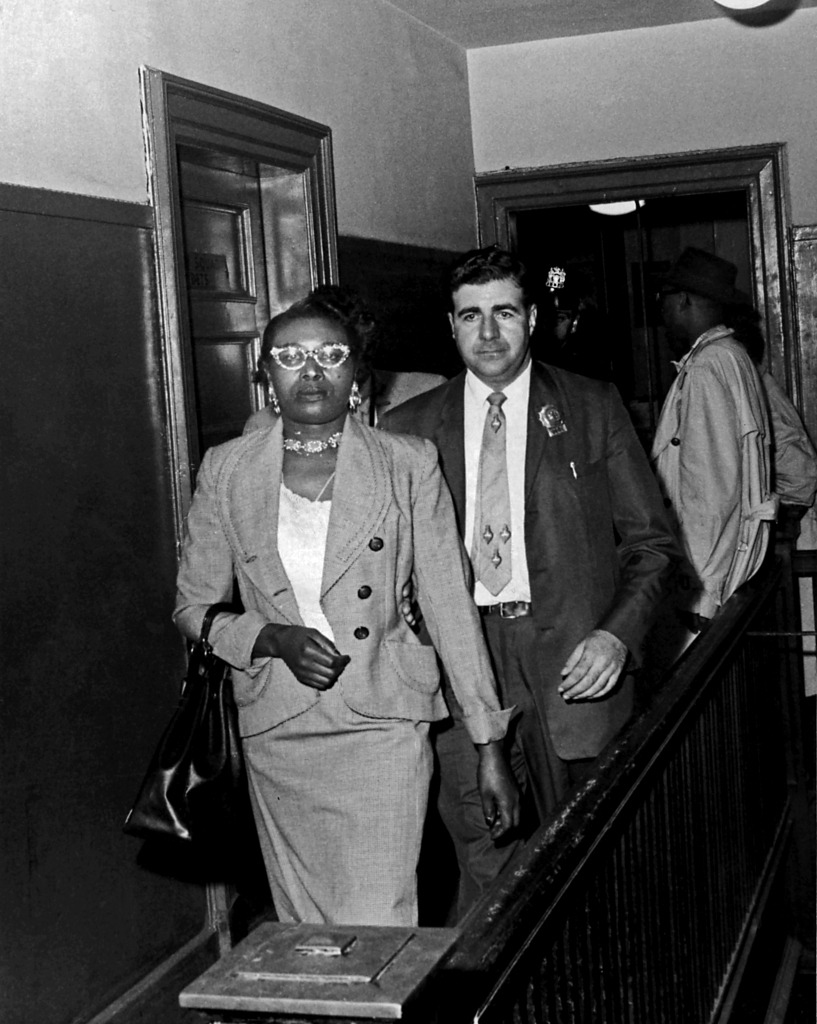
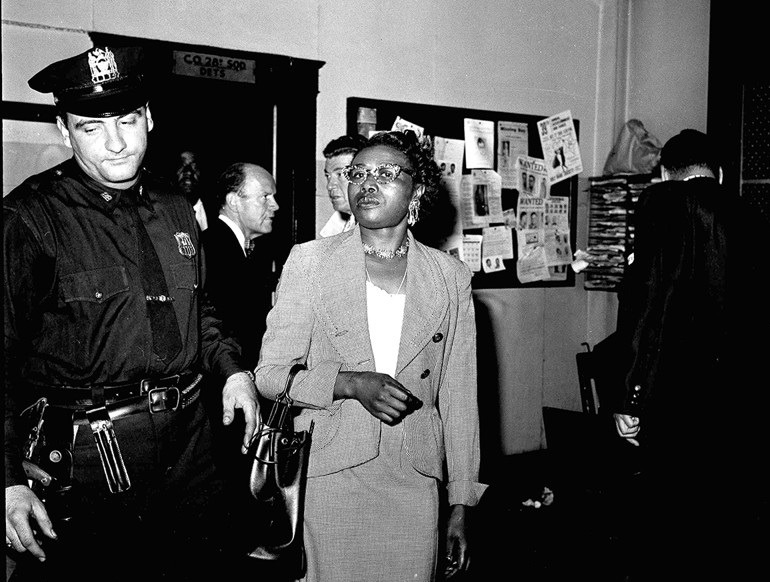
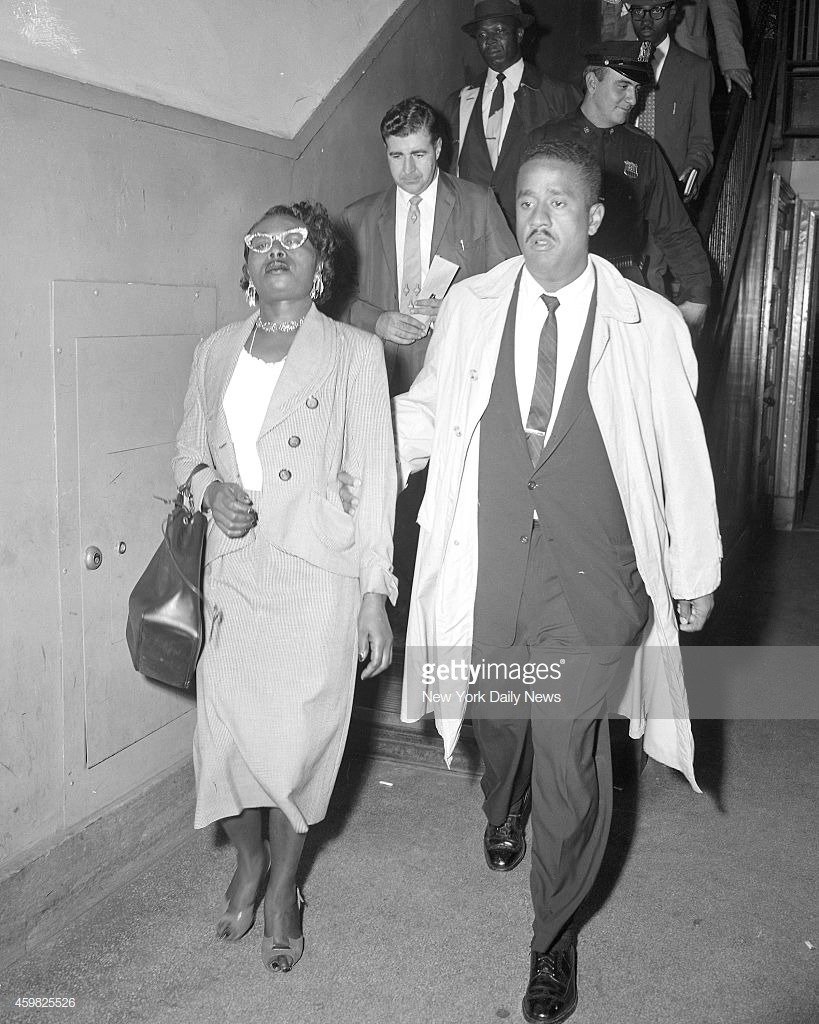
Izola Ware Curry enters a New York City police station, Sept. 20, 1958, where she was questioned in the stabbing of the Rev. Dr. Martin Luther King Jr. in a department store in Harlem during a book signing. Police said the civil rights leader was stabbed by Mrs. Curry, who told them several "rambling" stories and at times was incoherent.


“Is this Martin Luther King?”
That is the question, a simple one, that Izola Ware Curry asked Martin Luther King Jr. at a Sept. 20, 1958 book signing in Harlem. The 42-year-old Curry had a distinctive Southern accent and was neatly dressed in a suit with matching jewelry and sequined cat’s-eye glasses.
King was signing copies of his first book “Stride Toward Freedom: The Montgomery Story,” at Blumstein’s Department Store.
Only 29 at the time, King barely looked up when he replied, “Yes.” 
With that confirmation, Curry plunged a seven-inch steel letter opener into King’s chest. She was stopped before she could get her loaded .25-caliber automatic pistol out of her bra.

She didn’t try to run.

“I’ve been after him for six years,
Curry cried as she was apprehended.
“I’m glad I done it.”
https://66.media.tumblr.com/fa14dfe2408ea69d598aaadbee5bb5cf/tumblr_plp139JzYH1v3adc7o2_1280.jpg http://stuffnobodycaresabout.com/wp-content/uploads/2015/01/Arrest-Ms-Curry-stabbed-Martin-Luther-King-1958.jpg
The Story of Izola Ware Curry
and
The Stabbing of  Dr. Martin Luther King Jr.
 

As we observe Martin Luther King Jr. Day we’ll recount a story many people are not familiar with.
It’s a forgotten story in which the Civil Rights movement narrowly escaped a crippling blow in 1958.  It’s also the story of the woman who tried to be an assassin and failed and is now very old, free, and living a mostly anonymous life here in New York City.
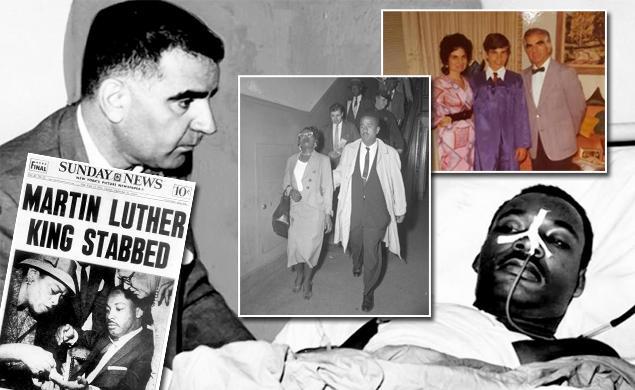
Ten years before being cut down by an assassin’s bullet in 1968, Reverend Dr. Martin Luther King Jr. came within a fraction of an inch of losing his life in an assassination attempt in New York City. 

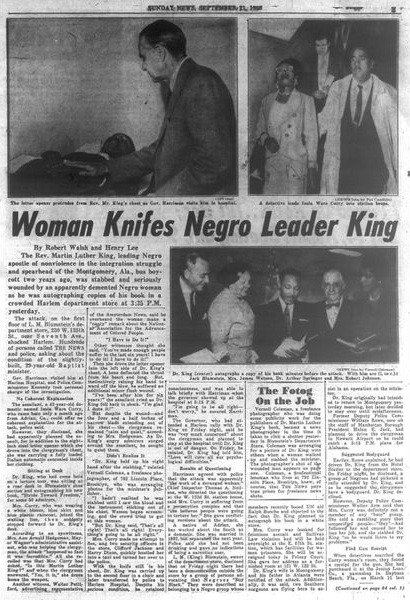
At 3:30 pm on September 20, 1958 Dr. King was in Harlem on the ground floor of  Blumstein’s Department store at 230 West 125th Street signing copies of his new book Stride Toward Freedom: The Montgomery Story. With about 20 people on line, a 42 year-old woman, Izola Ware Curry burst through the line, asking Dr. King if he was in fact Martin Luther King. When King affirmed he was, Curry said either “Why do you annoy me” or “I’ve been after you for six years,” and opened her purse, took out a letter opener, closed her eyes and suddenly plunged the steel blade into his left chest. 
The stunned Dr. King remained seated in his chair with the blade buried deep into his chest. Curry tried to leave the store but was seized quickly by those standing near Dr. King and held for the police. 
It was later discovered Curry also had an automatic handgun hidden in her bra.
At the book signing there was no police protection for Dr. King and the first police officers who responded to the scene, Al Howard and Phil Romano, were nearby in their police car when they received a report of a disturbance at Blumstein’s. They arrived to see King sitting in a chair with the steel letter opener protruding from his chest. Officer Howard told King, “Don’t sneeze, don’t even speak.”

Officer’s Howard and Romano escorted Dr. King, still in the chair, down to an ambulance and rushed him to Harlem Hospital. 
After waiting for the proper surgical team to arrive to perform the delicate operation, the Chief of Surgery Aubre Maynard attempted to pull out the letter opener, but cut his glove on the blade. 
At 6:30 pm Dr. King underwent a two and a quarter hour operation. A surgical clamp was finally used to pull out the blade.
After the surgery Dr. King was listed in critical condition. He contracted pneumonia while convalescing, but recovered completely and was released from the hospital two weeks after the attack.

In his posthumously published autobiography King wrote, “Days later, when I was well enough to talk with Dr. Aubre Maynard, the chief of the surgeons who performed the delicate, dangerous operation, I learned the reason for the long delay that preceded surgery. He told me that the razor tip of the instrument had been touching my aorta and that my whole chest had to be opened to extract it. ‘If you had sneezed during all those hours of waiting,’ Dr. Maynard said, ‘your aorta would have been punctured and you would have drowned in your own blood.'”

Ten years of world changing civil rights progress that Martin Luther King achieved might never have occurred had Izola Curry succeeded in her attempt.
  • Curry was arraigned the next day before Magistrate Vincent Rao who said “I understand this is the woman who is accused of stabbing the Reverend Dr. King with a knife.”
  • Curry shouted back at him, “No, it was a letter opener.”
  • Curry later interrupted the arraignment, shouting, “I’m charging him as well as he’s charging me.”
  •  Magistrate Rao replied, “What have you got against him?”
  • “I’m charging him with being mixed up with the Communists. I’ve reported the case to the FBI and it’s being looked into.” Curry answered.
  • “This woman is ill,” said Rao and he ordered Curry committed to Bellevue.

A grand jury later indicted Curry for attempted first-degree murder.
https://66.media.tumblr.com/746d7a76f7457e9f7a4f4018c22eb8f8/tumblr_plp139JzYH1v3adc7o3_1280.jpg
Curry was diagnosed with paranoid schizophrenia and two psychiatrists who examined her reported that she had an IQ of 70, “low average intelligence,” and was in a severe “state of insanity.” Curry was committed to the Matteawan State Hospital for the criminally insane. She expressed no remorse for trying to kill Dr. King.

https://66.media.tumblr.com/e2d2d96a11451693bffe2406322a3534/tumblr_plp139JzYH1v3adc7o5_1280.jpg
After being committed Curry remained mostly forgotten.

That is until some excellent investigative reporting by The Smoking Gun web site which discovered in July 2014 that Curry is still alive and at age 98, living in a Queens nursing home.


https://66.media.tumblr.com/070ba20683e1037bc1c3a9f2b9671eeb/tumblr_plp139JzYH1v3adc7o1_500.jpg

According to the Smoking Gun:
Curry spent nearly 14 years at the upstate Matteawan State Hospital for the criminally insane before being transferred in March 1972 to the Manhattan Psychiatric Center on Ward’s Island in upper Manhattan. She spent about a year there before officials placed her in the Rosedale, Queens home of a woman certified through the state’s “Family Care” program to provide residential care for those diagnosed with mental illnesses.

An examination by a panel of Manhattan Psychiatric Center officials, Curry was judged to be “coherent, relevant, cooperative and no present danger to self or others.”

Curry remained in the “Family Care” program moving in with another family, until she fell and injured her left leg which prompted her admission to the long-term nursing home where she now lives.

Curry resides in the Hillside Manor nursing home in Jamaica, a no-frills facility with 300 beds on bustling Hillside Avenue. The 98-year-old lives in a small room with a twin bed that looks out onto a rear parking lot. Next to her bed is a walker and a side table that appears to hold the entirety of her possessions–a stack of books, a couple of framed photos, and a small pink stuffed animal.

When Curry was asked questions about Dr. King and the stabbing she furrowed her brow and gave a blank stare. While offering no recollections of the attack, Curry referred to “1958” and said that she was placed that year in a “hospital for the criminally insane.”

In 1958 Curry told investigators that her motive was self-preservation, “Because after all if it wasn’t him it would have been me, he was going to kill me.”

Dr. King’s impact on history is immense. Izola Ware Curry’s impact is that of a living footnote.

Izola Ware Curry died on March 7, 2015.


Mahalia Jackson
Trouble of the World

👇 📽 👇


The day Martin Luther King Jr. was almost killed
A 1958 assassination attempt by a Georgia woman almost changed history
By    Ernie Suggs, The Atlanta Journal-Constitution
Who was Izola Ware Curry?

https://www.ajc.com/news/local/the-day-martin-luther-king-was-almost-killed/mVmjKGT3X7axXMGhp3hVpI
https://66.media.tumblr.com/622f6670476c67d38ca3d0839c99905a/tumblr_plp139JzYH1v3adc7o7_640.jpg


https://66.media.tumblr.com/070004dd790b0662453f0d831515c55e/tumblr_plozl0oJAL1v3adc7o2_500.jpg
https://66.media.tumblr.com/69234aeb35970ce1bdab3f9b71463f7f/tumblr_plozxsH7gm1v3adc7o1_640.jpg
Dr. Emil Naclerio was a Columbus Hospital Attending MD

Noel 🎄

Christmas 🎄Chorus🎤CMC Lobby

Chorus in the Lobby
Dec 5, 2003 
♪♫ ♪♫
Chrystalyn Terrell
http://41.media.tumblr.com/661cc2624ffe8d7ac7b100a1de201d32/tumblr_nh3e7fIHdd1t8vvygo6_1280.jpg

http://38.media.tumblr.com/a7a6bc1b8335819a6495d9c7e1580ba4/tumblr_nguepntCQ81t8vvygo2_r1_500.gif

VIDEO

http://38.media.tumblr.com/a7a6bc1b8335819a6495d9c7e1580ba4/tumblr_nguepntCQ81t8vvygo2_r1_500.gif

http://38.media.tumblr.com/a7a6bc1b8335819a6495d9c7e1580ba4/tumblr_nguepntCQ81t8vvygo2_r1_500.gif


Chrystalyn Terrell
HR Admin Assistant at Cabrini
Passed away from Pancreatic Cancer

https://38.media.tumblr.com/1b495191399273d2c7ace2c8e1254c56/tumblr_ngueq3nWPh1t8vvygo4_r1_400.jpg

http://38.media.tumblr.com/a7a6bc1b8335819a6495d9c7e1580ba4/tumblr_nguepntCQ81t8vvygo2_r1_500.gif