Showing posts with label Religion. Show all posts

Ave Maria🙏 Michał Lorenc ♫

"Ave Maria"
Michał Lorenc
Composer / Kompozytor
https://66.media.tumblr.com/be651cef2c5b2c2c365bf8ec349e6b0a/tumblr_ppyyu1gdT51smcgh0o1_1280.jpg
 Soprano /Sopran
Olga Szyrowa /Ольга Жирова

Voytek Soko  - Tenor
Voytek Soko - Dramatic tenor
Born in 1981 in Poland.
Urodzony w 1981r w Polsce.
Tenor dramatyczny młodego pokolenia.


The Most Beautiful
"Ave Maria"
(English Subtitles)


Michal Lorenc's Ave Maria with lyrics
Prayer  to Blessed Virgin Mary
Moscow Symphony Orchestra 
Jesus of Nazareth -  Franco Zeffirelli 1977 -  TV movie 
Actress Olivia Hussey

Composer / Kompozytor :  Michał Lorenc
Soprano / Sopran :  Olga Szyrowa / Ольга Жирова 
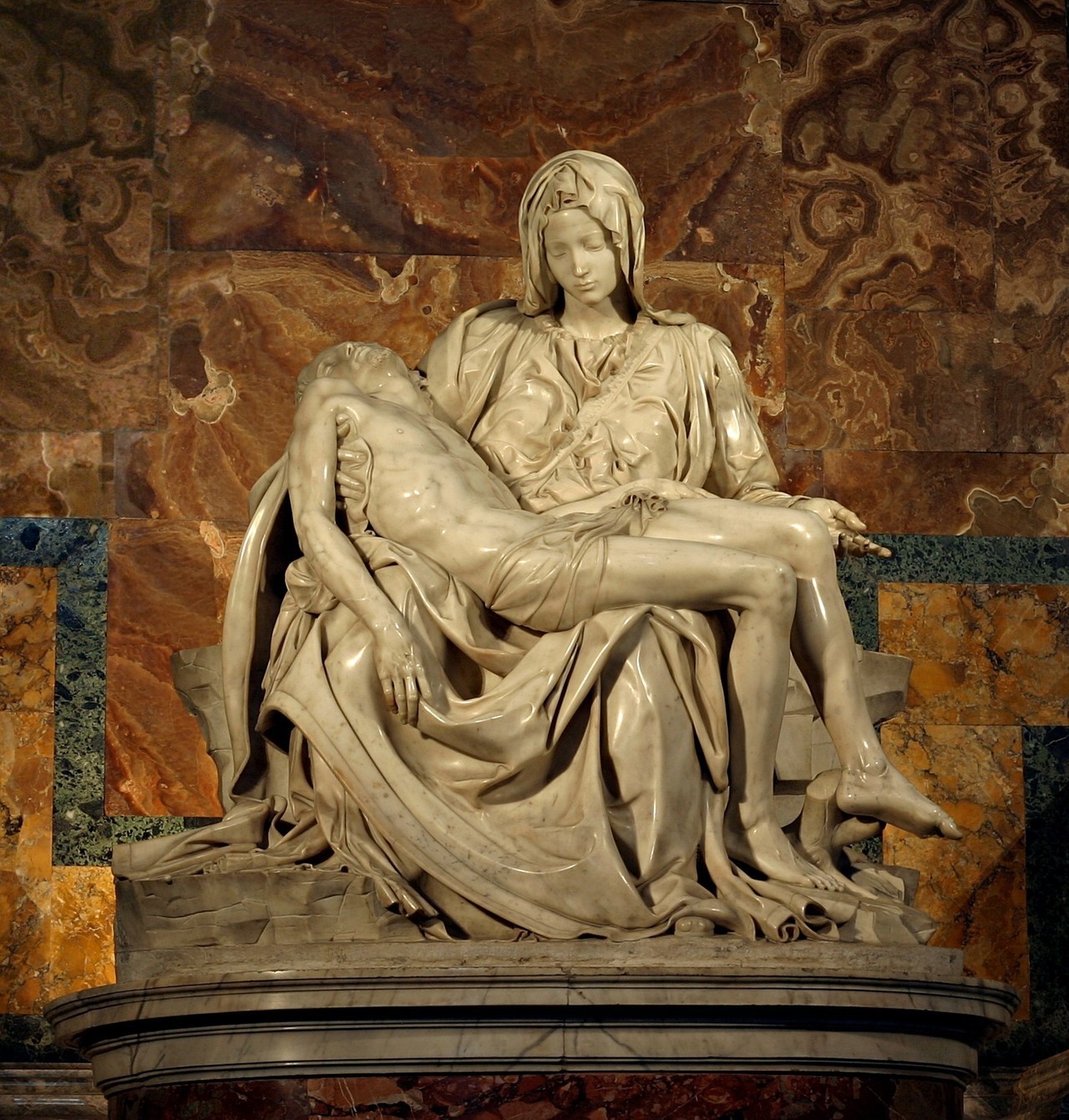
How time joins talents on earth together to create something heavenly is a mystery.  
One such convergence is Michał Lorenc's composition of Ave Maria  and Olga Szyrowa's voice.

Michał Lorenc was born in Warsaw and is a Polish composer of music for movies. 

His version of Ave Maria, "performed by the Russian opera singer Olga Szyrowa.

https://66.media.tumblr.com/a189df82cb9f8822d6430b18283a3e11/tumblr_ppyyu1gdT51smcgh0o2_1280.jpg

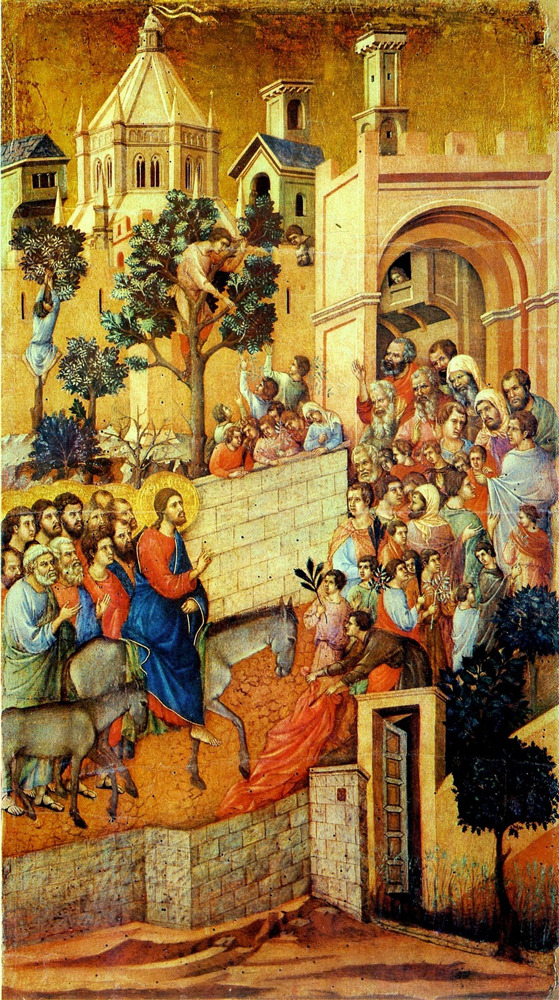
Palm Sunday - Entry of Christ into Jerusalem

The Entry of Christ into Jerusalem
https://66.media.tumblr.com/7f9ba6c62e96c5201e07756191036442/tumblr_ppv4mzthZ31v3adc7o1_1280.png
And the disciples went, and did as Jesus commanded them, and brought the ass, and the colt, and put on them their clothes, and they set him thereon. And a very great multitude spread their garments in the way; others cut down branches from the trees, and strawed them in the way. And the multitudes that went before, and that followed, cried, saying, Hosanna to the son of David: Blessed is he that cometh in the name of the Lord; Hosanna in the highest. And he was come into Jerusalem, all the city was moved, saying, Who is this? And the multitude said, This is Jesus the prophet of Nazareth of Galilee.
-- Matthew 21-30

In the painting Duccio has captured the moment of Jesus's coming to Jerusalem exactly as the the excerpt from Matthew has described it. Jesus is seen riding a donkey with a colt following directly behind him. The viewer can also see the people putting their clothing in the way and the people who are in the trees cutting down the branches. A large crowd has come to see the spectacle, and all believe that it is the coming of Jesus. The coming of Jesus extracts many emotions from the people and many are pleased with this arrival.

Duccio has put Jesus in blue and painted him a halo to show his significance in the painting. His followers and disciples have also been given halos. The painting has many levels, from the background of the buildings to the foreground of the people. However, these levels seem to all blend together and give a poor perspective. The only center of the painting is Jesus, and his blue clothing and halo draw our attention to him.

https://66.media.tumblr.com/a77ef85bb1a14b6268d560dc0b89f967/tumblr_ppv3i3KXpz1v3adc7o1_400.gif
The students of Renaissance and Modern Art History at the Barstow School want to share their learning, thus they came up with this snappy blog. Here you will find a variety of topics on all things Renaissance and Modern Art, we hope you enjoy it. Any questions, please contact mark.luce at barstowschool dot org.
https://66.media.tumblr.com/03707f660b90c0fd34c774fa2d3a913b/tumblr_ppv3i3KXpz1v3adc7o6_1280.gif

Palm Sunday April 14, 2019

https://66.media.tumblr.com/03707f660b90c0fd34c774fa2d3a913b/tumblr_ppv3i3KXpz1v3adc7o6_1280.gif
https://66.media.tumblr.com/7a5c5946fed155d1666e0470cbdd6457/tumblr_ppuzr0XqWp1v3adc7o1_1280.jpg
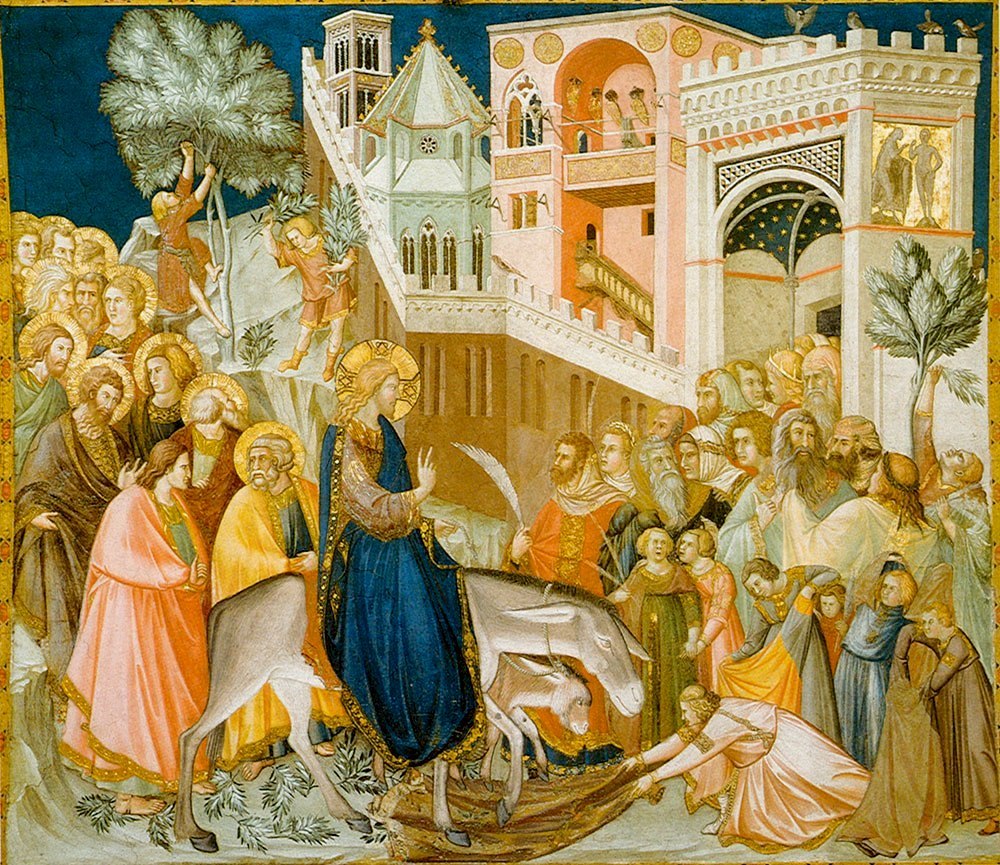
Entry of Christ into Jerusalem (1320) by Pietro Lorenzetti:
Entering the city on a donkey symbolizes arrival in peace rather than as a war-waging king arriving on a horse


Palm Sunday is a Christian moveable feast that falls on the Sunday before Easter. The feast commemorates Jesus' triumphal entry into Jerusalem, an event mentioned in each of the four canonical Gospels.
 
In most liturgical churches Palm Sunday is celebrated by the blessing and distribution of palm branches or the branches of other native trees representing the palm branches the crowd scattered in front of Christ as he rode into Jerusalem. The difficulty of procuring palms in unfavorable climates led to their substitution with branches of native trees, including box, olive, willow, and yew. The Sunday was often named after these substitute trees, as in Yew Sunday, or by the general term Branch Sunday

Biblical basis and symbolism
In the accounts of the four canonical Gospels, Christ's triumphal entry into Jerusalem takes place a week before his resurrection. Only the Gospel of John shows a timeline of the event, dated six days before the Passover (John 12:1). 

Before this, Jesus talked to two of his disciples, taking to himself the ancient Greek word of Lord (Κύριος, trasl. Kýrios), written with a capital letter in the original text, as a proper noun.
The raising of Lazarus is mentioned only by the Gospel of John, in the previous chapter. The Eastern Orthodox Church and the Eastern Catholic Churches which follows the Byzantine Rite, commemorate it on Lazarus Saturday, following the text of the Gospel. In fact, the Jewish calendar dates begin at sundown of the night beforehand, and conclude at nightfall.
 
Christian theologians believe that the symbolism is captured prophetically in the Old Testament: Zechariah 9:9 "The Coming of Zion's King – See, your king comes to you, righteous and victorious, lowly and riding on a donkey, on a colt, the foal of a donkey", which is quoted in the Gospels. It suggests that Jesus was declaring he was the King of Israel, to the anger of the Sanhedrin

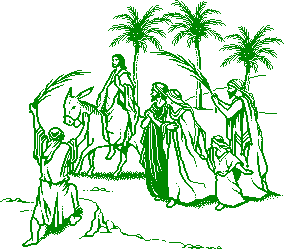
According to the Gospels, Jesus Christ rode a donkey into Jerusalem, and the celebrating people there laid down their cloaks and small branches of trees in front of him, singing part of Psalm 118: 25–26 – Blessed is He who comes in the name of the Lord. We bless you from the house of the Lord .
The symbolism of the donkey may refer to the Eastern tradition that it is an animal of peace, unlike the horse which is the animal of war. A king would have ridden a horse when he was bent on war and ridden a donkey to symbolize his arrival in peace. Jesus' entry to Jerusalem would have thus symbolized his entry as the Prince of Peace, not as a war-waging king. Thus there have been two different meanings (or more levels of biblical hermeneutics): an historical meaning, truly happening according to the Gospels, and a secondary meaning in the symbolism.

In Luke 19:41 as Jesus approaches Jerusalem, he looks at the city and weeps over it (an event known as Flevit super illam in Latin), foretelling his coming Passion and the suffering that awaits the city in the events of the destruction of the Second Temple

In many lands in the ancient Near East, it was customary to cover in some way the path of someone thought worthy of the highest honour. The Hebrew Bible (2 Kings 9:13) reports that Jehu, son of Jehoshaphat, was treated this way. Both the Synoptic Gospels and the Gospel of John report that people gave Jesus this form of honour. In the synoptics the people are described as laying their garments and cut rushes on the street, whereas John specifies fronds of palm (Greek phoinix). In Jewish tradition, the palm is one of the Four Species carried for Sukkot, as prescribed for rejoicing at Leviticus 23:40

In the Greco-Roman culture of the Roman Empire, which strongly influenced Christian tradition, the palm branch was a symbol of triumph and victory. It became the most common attribute of the goddess Nike or Victoria. For contemporary Roman observers, the procession would have evoked the Roman triumph, when the triumphator laid down his arms and wore the toga, the civilian garment of peace that might be ornamented with emblems of the palm.  Although the Epistles of Paul refer to Jesus as "triumphing", the entry into Jerusalem may not have been regularly pictured as a triumphal procession in this sense before the 13th century.
In ancient Egyptian religion, the palm was carried in funeral processions and represented eternal life. The palm branch later was used as a symbol of Christian martyrs and their spiritual victory or triumph over death. In Revelation 7:9, the white-clad multitude stand before the throne and Lamb holding palm branches.
https://66.media.tumblr.com/18e5afb95eb82c03b986b4b2c607c013/tumblr_ppv3i3KXpz1v3adc7o2_400.png
In ancient times, palm branches symbolized goodness and victory. They were often depicted on coins and important buildings. Solomon had palm branches carved into the walls and doors of the temple (1 Kings 6:29). Again at the end of the Bible, people from every nation raise palm branches to honor Jesus (Revelation 7:9).

Palm Sunday commemorates the entrance of Jesus into Jerusalem (Matthew 21:1–9), when palm branches were placed in his path, before his arrest on Holy Thursday and his crucifixion on Good Friday. It thus marks the beginning of Holy Week, the final week of Lent.

In the Roman Catholic Church, as well as among many Anglican and Lutheran congregations, palm fronds (or in colder climates some kind of substitutes) are blessed with an aspergillum outside the church building in an event called the "blessing of palms" if using palm leaves (or in cold climates in the narthex when Easter falls early in the year). A solemn procession also takes place, and often includes the entire congregation. 

In the Catholic Church and the Episcopal Church, this feast now coincides with that of Passion Sunday, which is the focus of the Mass which follows the palms ceremony. The palms are saved in many churches to be burned on Shrove Tuesday the following year to make ashes used in Ash Wednesday services. The Catholic Church considers the blessed palms to be sacramentals. The vestments for the day are deep scarlet red, the colour of blood, indicating the supreme redemptive sacrifice Christ was entering the city to fulfill: his Passion and Resurrection in Jerusalem.

In the Episcopal and many other Anglican churches and in Lutheran churches, as well, the day is nowadays officially called "The Sunday of the Passion: Palm Sunday"; in practice, though, it is usually termed "Palm Sunday" as in the 1928 American Book of Common Prayer and in earlier Lutheran liturgies and calendars, to avoid undue confusion with the penultimate Sunday of Lent in the traditional calendar, which was "Passion Sunday".
In the Church of Pakistan (a member of the Anglican Communion), the faithful on Palm Sunday carry palm branches into the church as they sing Psalm 24.
In many Protestant churches, children are given palms, and then walk in procession around the inside of the church .

In traditional usage of the Methodist Church, The Book of Worship for Church and Home (1965) provides the following Collect for Palm Sunday:
Almighty and everlasting God, who, of thy tender love toward mankind hast sent thy Son our Savior Jesus Christ to take upon him our flesh, and to suffer death upon the cross, that all mankind should follow the example of his great humility: Mercifully grant that we may both follow the example of his patience and also be made partakers of his resurrection; through the same Jesus Christ our Lord. Amen.
In Spanish, it is sometimes called Pascua florida, and it was from this day in 1512 that the state of Florida received its name.

https://66.media.tumblr.com/f3a9bb4979dafcf761321b1a74c494a2/tumblr_ppv2qqkmuh1v3adc7o5_r1_1280.gif